
Table of Contents
- Introduction
- How Practising Pranayama Helps in Winter
- Benefits of Practicing Pranayama for Winter
- Effective Pranayama Techniques for Winter
- How to Incorporate Pranayama into Your Winter Yoga Routine
- Safety Tips for Practicing Pranayama During Winter
- Conclusion
As the winter approaches, we see the length of days decrease as the Earth’s axis is tilted away from the Sun. As a result, many people experience various changes in their physical and mental health due to this seasonal change. Seasonal changes tend to be accompanied by bouts of excessive tightness in the neck muscles, low energy levels, increased feelings of laziness, as well as an increased chance of catching a cold or flu.
Pranayama provides a simple yet effective means of dealing with the various effects of winter. Pranayama is the formal training of breath control; it goes beyond simply learning how to take a deep breath. During winter, specific pranayama techniques provide energy balance to the body, help to produce internal heat (known as Agni), and improve the immune response of the body. With proper training in pranayama, your breath can become the body’s self-regulating mechanism, turning winter into a time of activity rather than just survival.
How Practising Pranayama Helps in Winter
Pranayama works on three levels: physical, energetic, and subtle. It fights the cold by
1.Trapping Heat Inside (Tapas)
Some breathing techniques serve to heat the body. They all enhance metabolism and blood flow. When blood flow is improved, the circulation of your fingers and toes gets warmer and the sense of "chilliness" that often comes with low energy goes away. This is one of the practices from the Sanskrit word tapas, which means "to heat; to burn."
2. Finding a Balance in the Nervous System
Cold Weather increases stress by causing muscle tightening and anxious or depressed thoughts. Pranayama affects the nervous system directly using breathing techniques. Ujjayi (Victorious Breath) and Nadi Shodhana (Alternate Nostril Breathing) are two of the methods to decrease the Sympathetic (Fight or Flight) and stimulate the Parasympathetic (Rest & Digest) systems. Decreasing the production of stress hormones (such As Cortisol) will allow the immune system to function at its highest capacity.
3. Improving the Exchange of Oxygen
The poor indoor air quality creates a need for better oxygen intake. Pranayama helps by making your breathing process much more efficient, allowing your body to extract and circulate the maximum amount of oxygen possible, which, in turn, boosts the health and function of every cell in your body.
Benefits of Practicing Pranayama for Winter
Adding a regular breathwork practice to your routine during the winter months has several specific benefits:
- Pranayama's energy-boosting properties promote higher metabolism and increased levels of energy throughout the day.
- When the body experiences low levels of stress and improved blood flow, it allows the body to build its natural defences against illness and viruses like the common cold and flu via enhanced immune function.
- Seasonal Affective Disorder (SAD) occurs in winter when there is less light or brightness. Pranayama gives people a natural way to combat SAD because it helps to create balance in the mind and decrease anxiety, plus clarity.
- Detoxification occurs when you take in deep breaths and bring the temperature of the body up; these practices help to remove toxic substances from the body that build up during periods of inactivity.
These warming pranayama techniques practices balance the heavy, cold and damp characteristics associated with the Kapha season, allowing people to stay in balance and feel energized.
Effective Pranayama Techniques for Winter
To really beat the winter chill, use these warming pranayama techniques that warm you up and get you moving.
1. Kapalabhati (The Breath of Skulls)
Kapalabhati is one of the safest and quickest ways to heat your body and eliminate any impurities that you may have in your system.
How to Practice Kapalabhati:
This breathing technique is characterized by many strong exhalations with little or no inhalation. To perform the Kapalabhati breathing. Sit comfortably with your spine straight and your breath flowing naturally. Next forcefully exhale through your nose while drawing your lower abdomen toward your spine. After each exhalation, your body will automatically inhale. Repeat this process for 20 to 30 repetitions.
Benefits of Practicing Kapalabhati in Winter:
Instantly warms your body, provides relief from excess mucus and sinus congestion in your respiratory tract, and stimulates the proper function of your abdomen (Agni).
Caution:
This technique is very strong and therefore should be avoided by women who are pregnant, have uncontrolled hypertension, have a hernia, or are on their menstrual cycle.
2. Bhastrika (The Breath of Bellows)
Bhastrika is a much stronger form of Kapalabhati and combines both possible inhalation and exhalation techniques.
How to Practice Bhastrika:
Take deep, strong breaths in through your nose and then forcefully exhale through your nose. Just as with Kapalabhati, the Bhastrika technique will cause your abdomen to move in and out just like the action of a bellows. When first practicing this technique, start off slowly, working up to approximately 1-2 minutes of Bhastrika practice at a time.
Benefits of Practicing Bhastrika in Winter:
Very effective at raising your body temperature quickly, significantly increasing the amount of oxygen you are getting into your bloodstream, and giving your nervous system a large shot of energy.
Caution:
Bhastrika is a very strong breathing technique and guidance is advised when practicing this method.
3. Ujjayi Breath
Ujjayi breath is an excellent form of exercise to practice with your body. Ujjayi means breath of victory, and it serves as the foundation for most active styles of yoga.
How to Practice Ujjayi:
Perform by taking a breath in and out through your nose, you will slightly constrict your throat. This tightening in your throat creates a gentle "ocean" sound with each slow, deep inhalation and exhalation; both breath cycles are done in time together.
Benefits of Practicing Ujjayi Breathing:
Ujjayi creates heat while continuously and rhythmically creating sounds and providing steady deep breathing to remain focused and calm, maintaining equal amounts of stimulating and calming energy within the body.
4. Nadi Sodhana
Nadi Sodhana, also known as alternate nostril breathing, is a pranayama or yogic breathing technique for purifying subtle energy channels in the body.
How to Practice Nadi Sodhana:
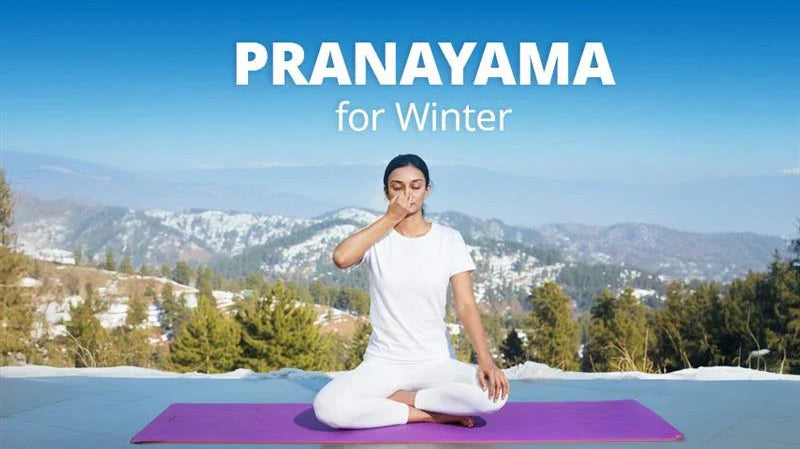
It is also known as breathing through one nostril only to find balance. You will need to close off your right nostril with your thumb. Inhale deeply through your left nostril; then using your right hand, place the ring and pinky fingers on the left nostril and remove your thumb; you will now exhale through your right nostril. You will then inhale through the right nostril; then close the right nostril while opening the left, and exhale through the left nostril; this is considered one complete cycle.
Benefits of Practicing Nadi Sodhana:
Nadi Sodhana does not necessarily create heat in the body in an energetic manner. Still, it balances both the Prana Vayus and helps prepare the body for the control of temperature and calmness of the mind after practice.
How to Incorporate Pranayama into Your Winter Yoga Routine
You shouldn't do pranayama by itself; you should do it along with your physical practice (asana).
- Begin Your Practice (Stimulation): Start with 5 to 10 minutes of Kapalabhati or Bhastrika to warm up your body, clear your airways, and give you a quick energy boost before you start doing physical poses.
- During Your Practice (Be Consistent): Do Ujjayi in all your poses, whether they are Vinyasa or Hatha. This keeps the body's heat in, keeps the focus inward, and makes sure the breath stays deep and steady while moving.
- Finish Your Practice (Balance): After the heating techniques, end your session with 5 to 10 minutes of Nadi Sodhana to calm your nervous system and bring your body back into balance. After this, do a long, calm Savasana.
Safety Tips for Practicing Pranayama During Winter
Pranayama is very good for you, but you need to know how to do it right, especially for the more intense types:
- Practicing in a Room with Plenty of Air: When you practice, ensure that the space has adequate ventilation and is warm enough that you will not become cold. Be sure to avoid areas of cold draft.
- Practice on an Empty Stomach: It is best to practice Kapalabhati and Bhastrika (both of which are powerful breathing exercises) with an empty stomach, meaning at least 3-4 hours since your last large meal.
- Keep Your Spine Straight: To allow your breath to flow freely, it is necessary to keep your spine tall and straight, whether sitting on the floor or in a chair.
- Listen to Your Body: If at any point during your practice, you begin to feel dizzy, lightheaded, short of breath, etc., you need to stop practicing immediately and return to normal breathing.
- Seek Guidance of an Instructor: If you are unfamiliar with Kapalabhati or Bhastrika, seek out assistance from a qualified instructor of Pranayama Yoga or similar discipline prior to attempting these exercises independently.
Conclusion
Don’t let winters affect you spirt and strength. Try to nurture yourself with Pranayama, a very gentle yet powerful way of nurturing and providing access to your own inner warmth and an opportunity to energize yourself through breathing.
By practicing warming breaths for 10 - 20 minutes daily, you can preserve your body temperature and improve your health. You will experience peace, calm, and strength through your daily practice of Pranayama. So, breathe deeply, stay warm, and create the healthiest winter of your life!