
Cotton Yoga Mats


Cotton Yoga Mats: A Natural Choice for Comfortable Yoga Practice
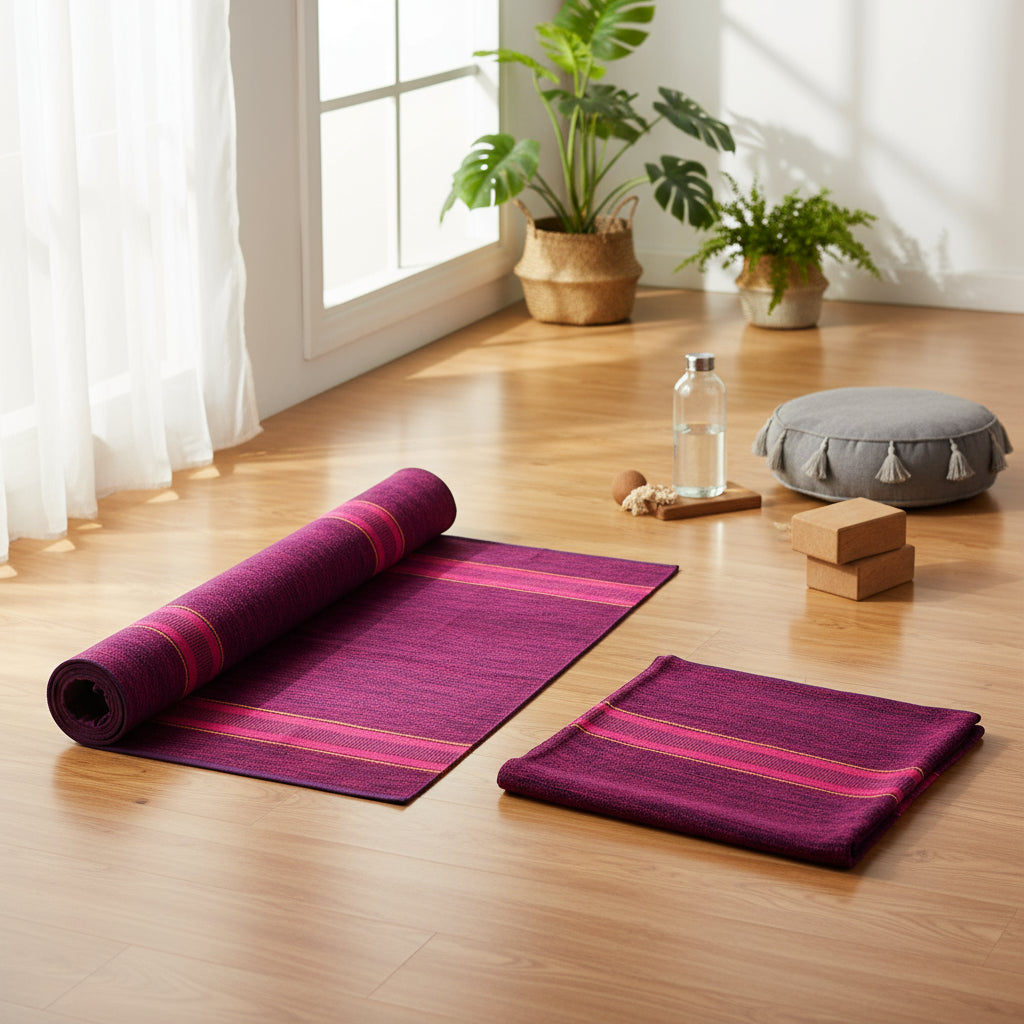
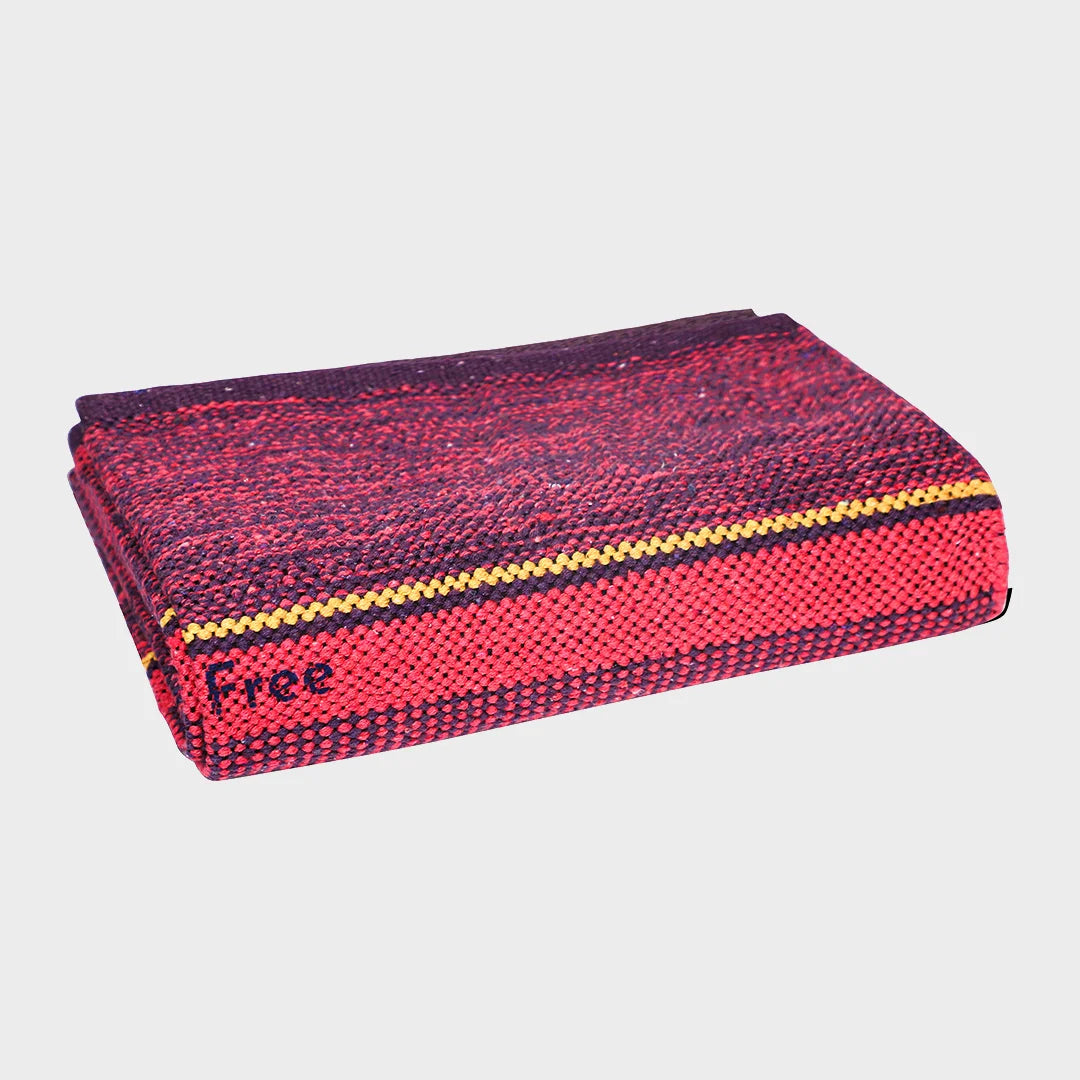
Selecting a suitable yoga mat can enhance your yoga practice by increasing comfort and stability. Cotton yoga mats serve as a great natural substitute to various synthetic yoga mats because of their ability to offer soft, breathable, and moisture-absorbing surfaces. They are designed with textured cotton weaving which offers an adequate grip, and soft rubber backing prevents the mat from sliding when placed on a smooth surface.
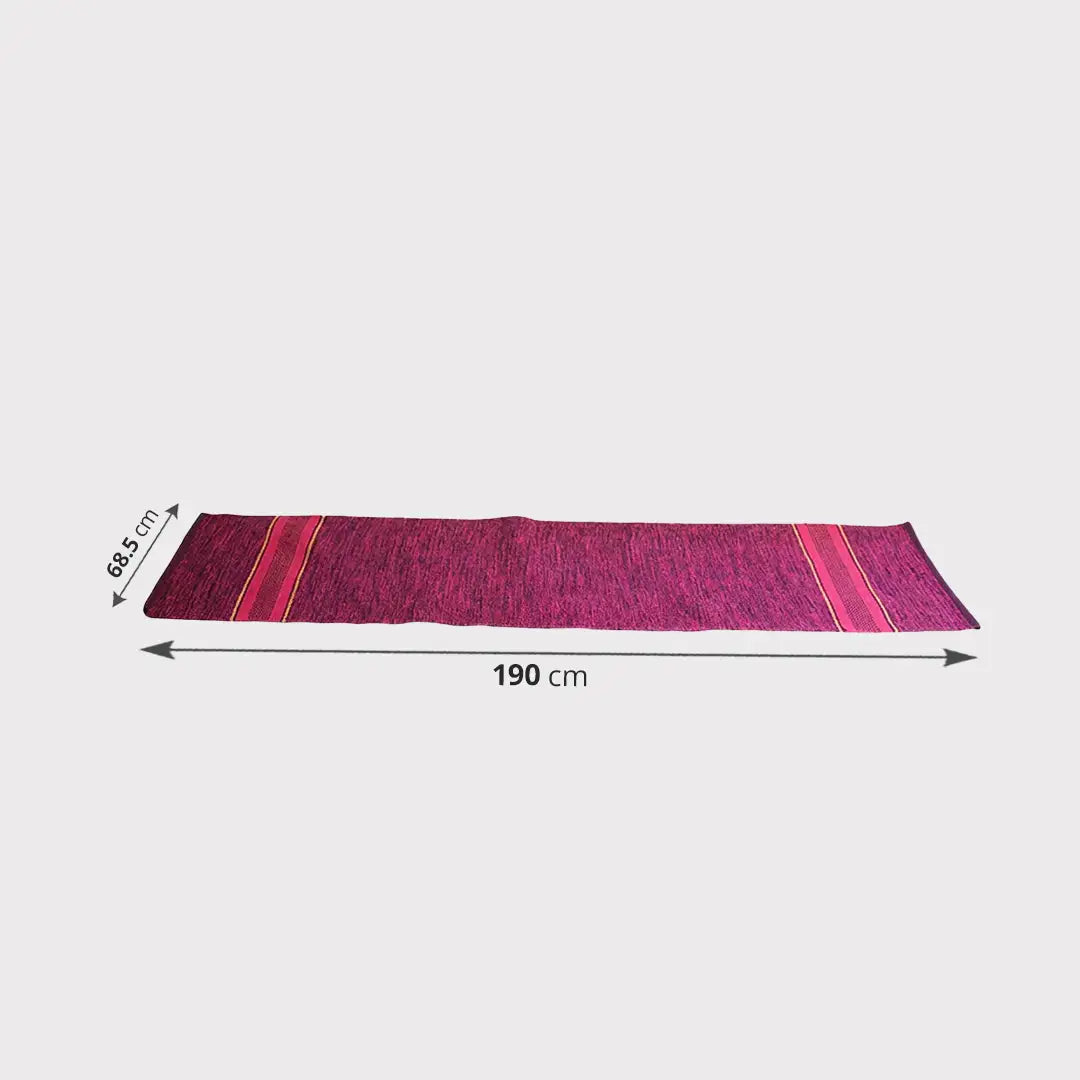
In addition to being lightweight, they can also easily be folded making them suitable to be used at home, at the studio, or while travelling. Thus, if your priority is to practice traditional yoga using natural materials, you might find cotton yoga mats beneficial. With the freedom to carry your practice wherever you go, you can feel, I am Free to practise with greater comfort, awareness, and ease.
Key Features of Cotton Yoga Mats
A good yoga mat should provide a comfortable surface while supporting stability throughout your practice. MeFree cotton mats combine traditional craftsmanship with practical features.
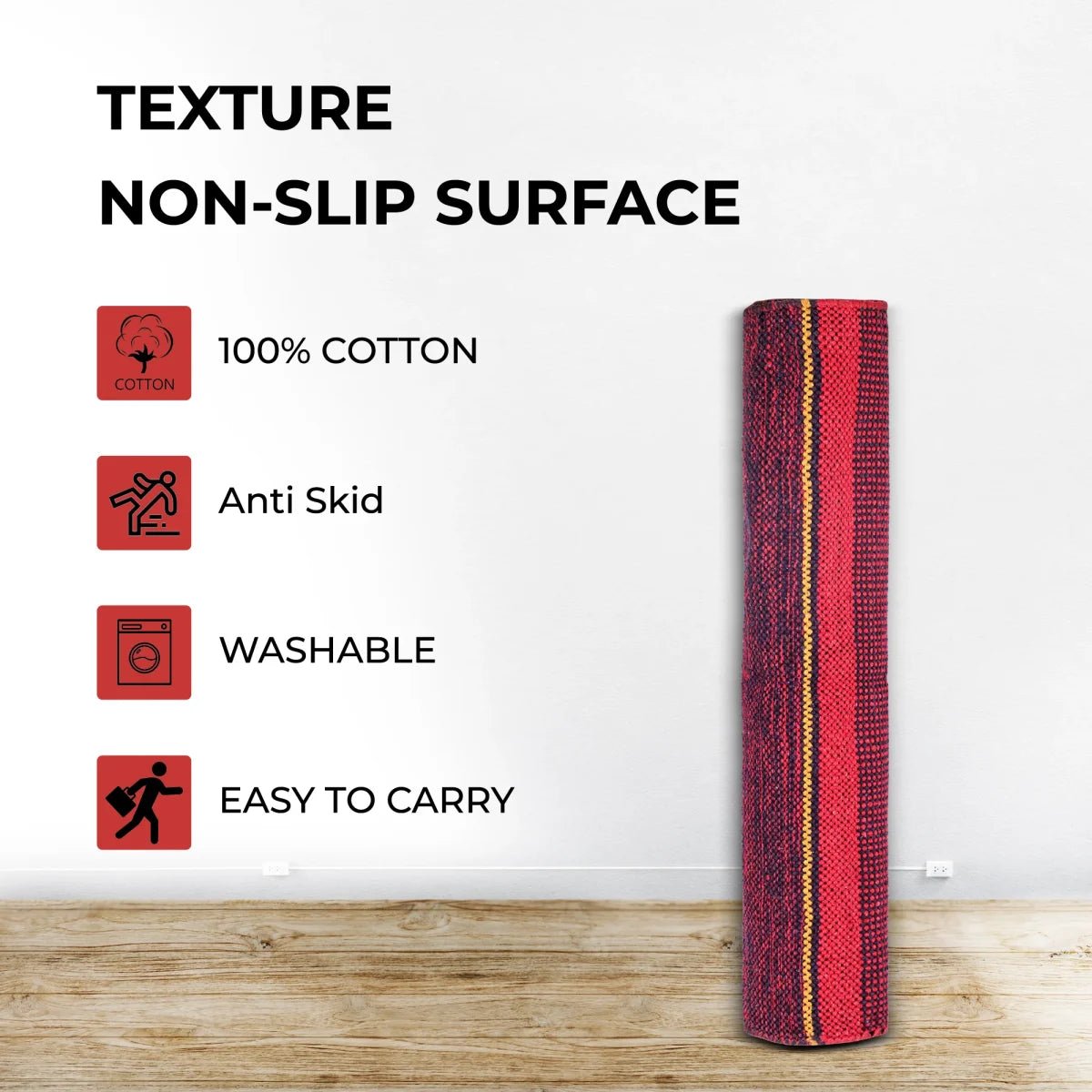
1. Natural Cotton Construction
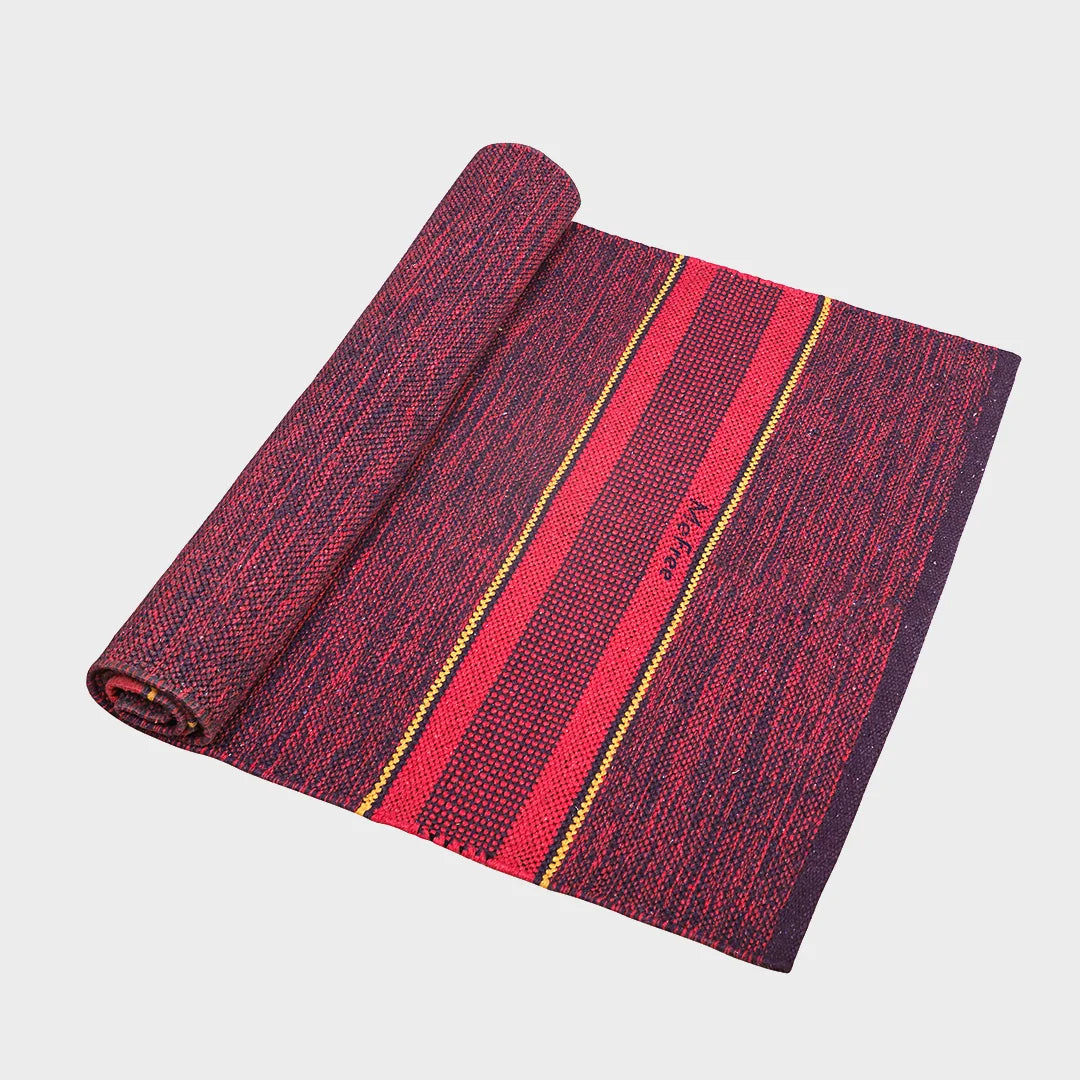
The MeFree cotton mat is constructed from cotton and uses high-quality handcrafted sewing.
- Gives a gentle and skin-friendly surface.
- Serves as a breathable option in place of synthetic materials.
- Delivers a natural experience in yoga, stretching, and relaxation.
2. Textured Weave for Natural Grip
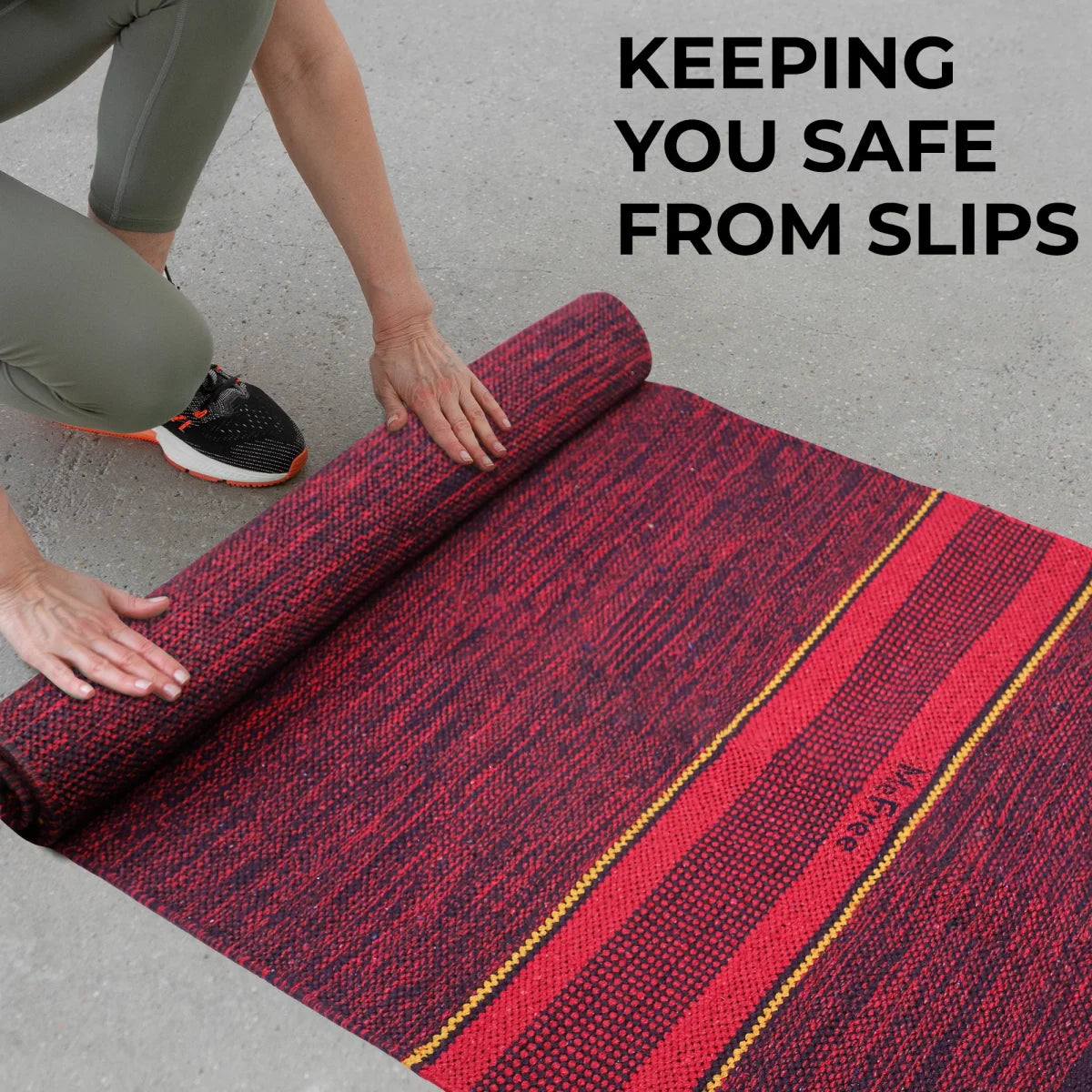
The horizontal weave and raised texture create natural grip during practice.
- The grip can improve as you sweat.
- The textured surface can support poses such as Adho Mukha Svanasana (Downward-Facing Dog) and Phalakasana (Plank Pose).
- It is particularly suitable for traditional and moderate-paced practices.
3. Anti-Slip Rubber Backing
The anti-slip rubber backing helps prevent the mat from bunching or sliding on smooth surfaces.
This ensures improved stability while performing poses as well as moving from one asana to another, which eliminates the need for continuous adjustments of your mat.
4. Lightweight and Foldable
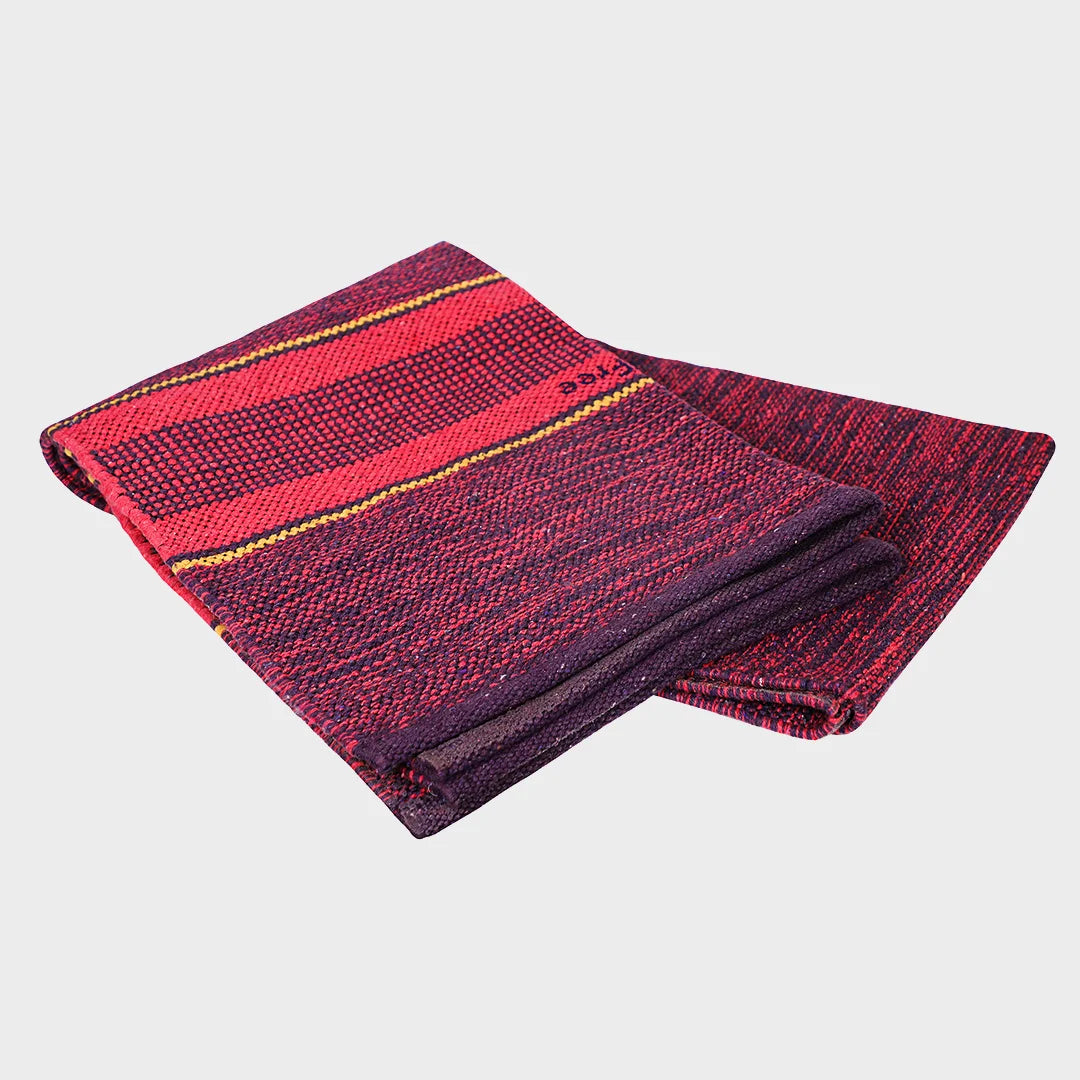
Cotton Mats are lightweight and easy to fold.
- Convenient to carry to a yoga studio.
- Easy to store at home.
- Suitable for practitioners who travel regularly.
5. Easy to Maintain
You can wash the mat using mild detergent to make it clean and fresh. However, use of bleach is prohibited. Adhering to the directions for care makes it possible to prolong the life of the mat.
6. Eco-Conscious Design
MeFree cotton yoga mats are made in India using biodegradable, PVC-free, and non-toxic materials. This makes them an option for practitioners who want to make more conscious choices about their yoga equipment.
Benefits of Using Cotton Yoga Mats
The right mat can make a difference to the comfort and convenience of your practice.
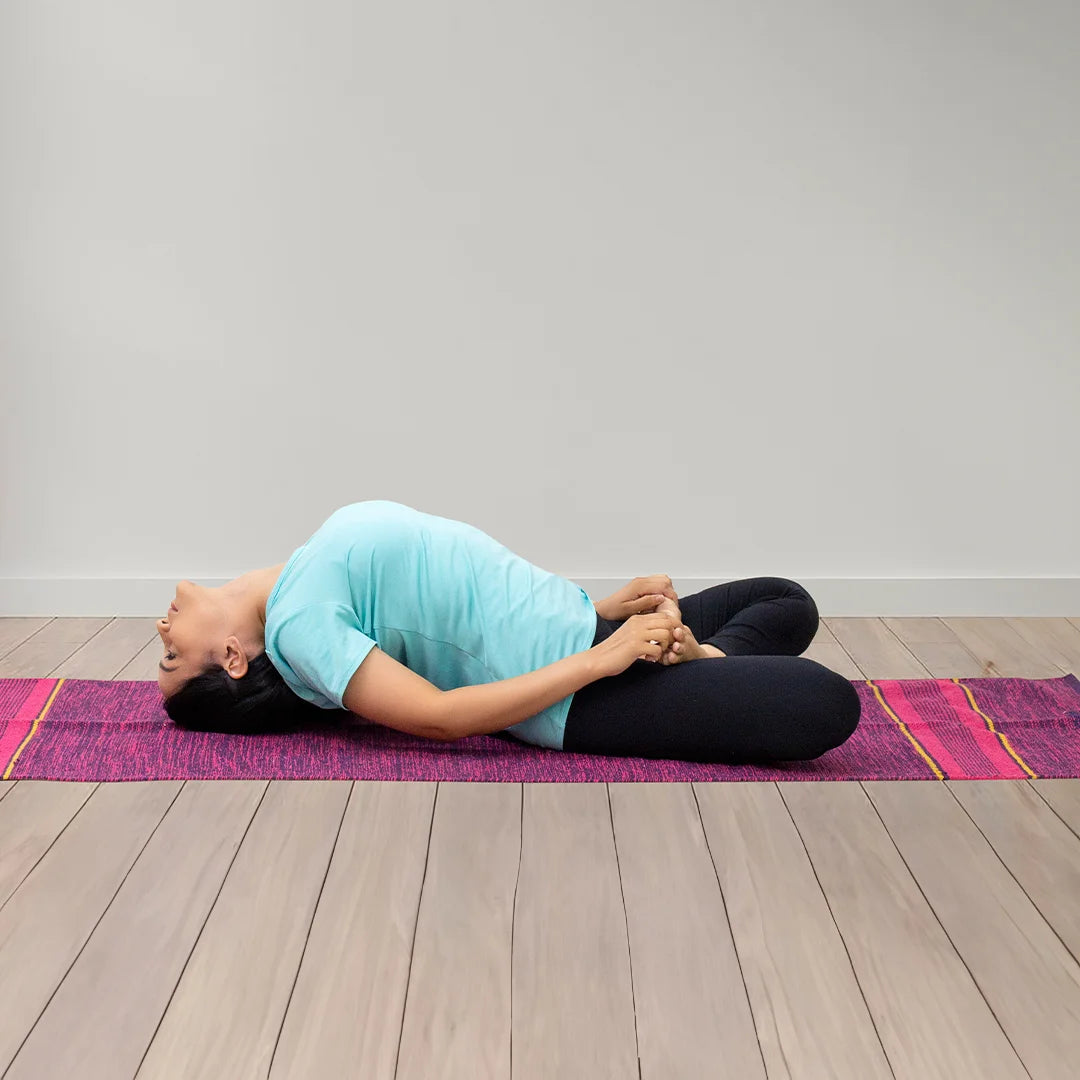
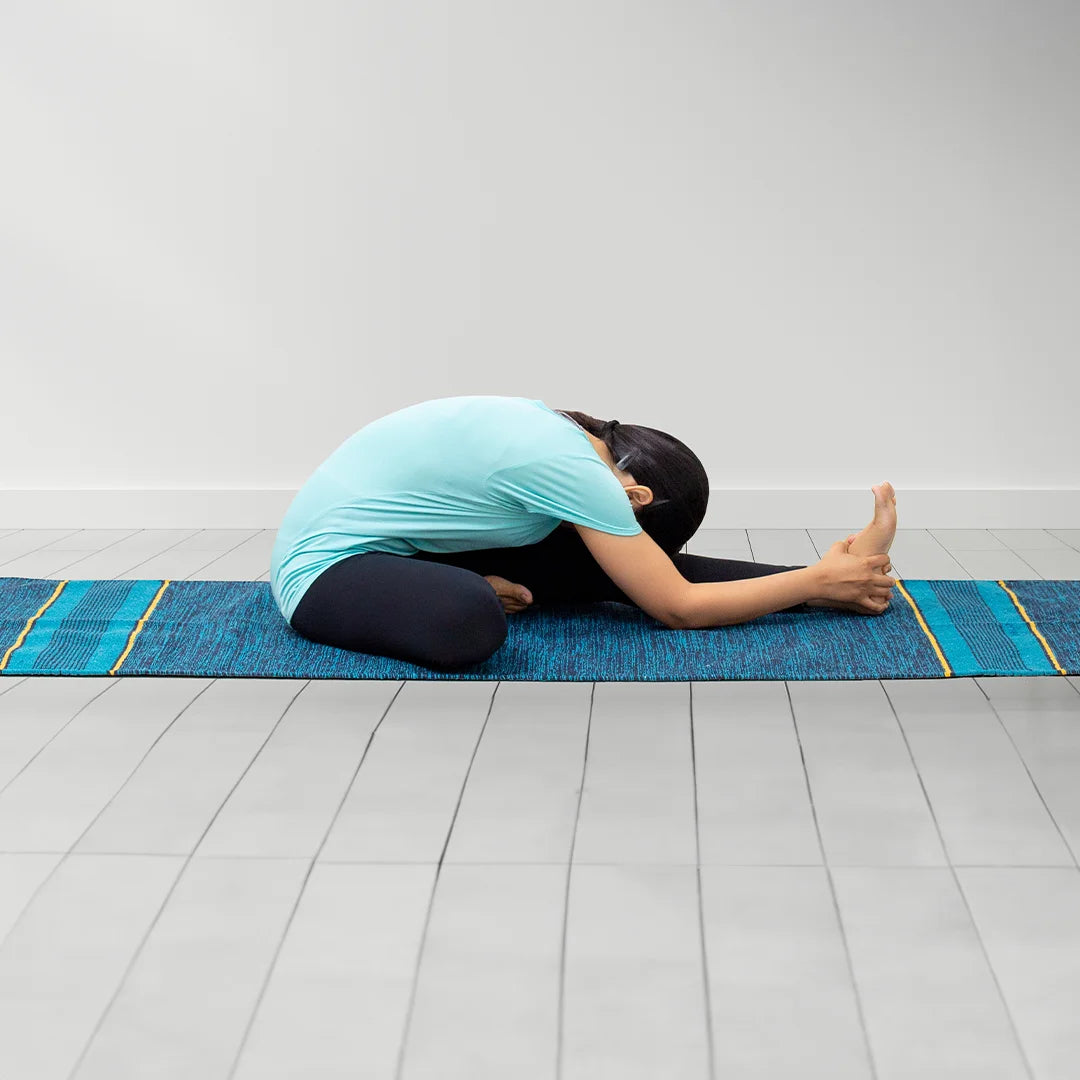
- Comfortable and Skin-Friendly: The soft texture of the cotton gives a pleasant feeling on the skin. It is especially beneficial in seated poses and floor exercises such as Sukhasana (Easy Pose), Vajrasana (Thunderbolt Pose), and light stretches.
- Breathable and Sweat Absorbent: Cotton is by nature breathable and sweat absorbent. This will help control moisture while practicing, as well as keep the comfort of the fabric.
- Natural Grip During Practice: The raised surface along with the horizontal stitching offers excellent grip. As you sweat, the grip improves which can be beneficial when performing poses that require feet and hands to be firmly planted.
- Helps Keep the Mat Stable: The non-slip rubber bottom assists in minimizing sliding on smooth floors. This is applicable in poses that require standing positions, like Tadasana (Mountain Pose), Virabhadrasana II (Warrior II), and Trikonasana (Triangle Pose).
- Lightweight and Portable: For those who practice yoga in different locations, a foldable mat is a great assistant. You can fold and carry your mat with you to the studio, office, and during travel.
- Easy to Clean: Choosing a washable yoga mat makes practice much easier to maintain. The MeFree cotton yoga mat should be washed with a mild detergent so that surface remains clean and fresh. However, it is important to avoid using bleach.
- Eco-Friendly Alternative: For people looking for Eco-friendly cotton mats, one should choose a mat made from biodegradable and PVC free materials. The MeFree mats use cotton and other materials to offer a safer alternative to traditional synthetic mats.
Who Should Use Cotton Yoga Mats?
Cotton yoga mats can be suitable for practitioners who prefer a natural, breathable, and lightweight practice surface. They are as follows:
- Beginners: Cotton mats are ideal for beginners to practice yoga comfortably, particularly for light yoga and breathing exercises.
- Traditional Yoga Practitioners: Cotton mats are particularly suited to traditional, slow-paced, and restorative practices. They can be used for asanas, pranayama, meditation, gentle stretching, and relaxation.
- Eco-Conscious Practitioners: Those who appreciate using organic materials will surely think of the cotton mat as a good alternative to synthetic mats.
- Home Practitioners: Cotton mats are suitable for home workouts, especially when your routine includes yoga, stretching, breathwork, and meditation. Their foldable design also makes them easy to store.
- Travelling Practitioners: The lightweight construction makes cotton mats convenient for practitioners who regularly travel or attend classes at different locations.
For high-intensity or sweat-heavy workouts, however, practitioners may prefer a thicker or more heavily cushioned mat designed for those activities.
Whether you’re looking for a cotton mat for home use or purchasing something lighter for studio practice, the MeFree cotton yoga mat checks all the boxes when it comes to comfort, portability, adhesion, and maintenance. To choose the right mat for yourself, consider the style of yoga you practice, what type of cushioning you would like to have in your mat, and whether you prefer natural materials.
FAQs
1. Do cotton yoga mats provide good grip?
Yes. The horizontal weave and raised texture of the MeFree cotton mat provide natural grip. The grip can become better as you sweat during practice. The anti-slip rubber backing also helps prevent the mat from sliding on smooth surfaces.
2. Are cotton yoga mats suitable for travel?
Yes. Cotton yoga mats are lightweight and easy to fold, making them convenient to carry while travelling. They can be used at different locations, making them a practical option for practitioners who want to continue their yoga practice while away from home.
3. Will a cotton yoga mat lose its shape after washing?
The MeFree cotton mat is designed to be easy to maintain and can be washed with mild detergent. Following the recommended care instructions and avoiding bleach can help maintain its condition and shape.
4. Is a cotton mat suitable for home workouts?
Yes. Cotton mats are suitable for home workouts, particularly for gentle yoga, stretching, breathwork, and traditional, slow-paced practices. Their lightweight and foldable design also makes them convenient for home use.
5. Can a yoga mat bag be used for cotton and TPE yoga mats?
Yes. A suitable yoga mat bag can be used to carry both cotton and TPE yoga mats. The Grey Yoga Mat Bag also comes with extra storage space, making it useful for carrying additional yoga essentials along with your mat.
6. How long does a cotton yoga mat last?
The lifespan of a cotton mat depends on how frequently it is used and how well it is maintained. Regular cleaning with mild detergent and proper care can help keep the mat in good condition for longer.
7. How is a cotton mat different from other yoga mats?
A cotton yoga mat has a natural, breathable, and sweat-absorbent fabric surface, unlike many synthetic yoga mats. The MeFree cotton mat features a horizontal weave and raised texture for natural grip, along with an anti-slip rubber backing for stability. It is also made using biodegradable, PVC-free, and non-toxic materials.