
Table of Contents
- Introduction
- Benefits of Yoga for Low Blood Pressure
- Best Yoga Poses for Low Blood Pressure
- Additional Lifestyle Tips for Managing Low Blood Pressure
- Conclusion
Low blood pressure, also known as hypotension, happens when the pressure of blood in your arteries is less than normal, which causes feelings such as dizzy, fainting, and fatigue. Although high blood pressure is often more focused on, hypotension can be a health danger as well if it is not treated properly. Dehydration, undernourishment, bed rest for a long period of time, heart diseases, endocrine disorders, and nervous system issues are some of the factors that lead to low blood pressure. There are several Yoga poses for low blood pressure which are helpful in dealing with low blood pressure.
On the better side, regular medication may be helpful but practicing natural remedies like yoga helps to improve blood flow and control the blood pressure levels. Carrying out specific yoga poses may induce the blood flow, diminish stress, and make the cardiovascular system stronger. Besides that, yoga practices mindfulness and relaxation, which is beneficial for predicting blood pressure changes due to stress or anxiety. Here this guide will help you learn about different Yoga poses for low blood pressure.
Benefits of Yoga for Low Blood Pressure
Yoga offers several benefits for individuals with hypotension, making it a holistic and effective approach for managing the condition. Some of these benefits include:
- Improves Blood Circulation: The gentle yoga movements and stretches increase blood flow that ensures more oxygen and nutrients are carried to vital organs all over the body. These poses lead to stronger immune power and thus prevents the genesis of diseases.
- Stress Reduction: Breathing exercises and relaxation techniques can reduce the levels of stress by keeping blood pressure stable. This also reduces the anxiety and tension that people often face when experiencing life-changing situations.
- Enhances Heart Function: Yoga can be used to train the cardiac muscle to be more efficient in the long run, so that the risk of dizziness is reduced.
- Better Autonomic Nervous System Balance: Yoga teaches you to keep the autonomic nervous system in balance, thus - the self-regulation of heart rate, breathing, and other vital functions are improved.
Best Yoga Poses for Low Blood Pressure
Here are five effective yoga poses that can help manage hypotension:
1. Balasana (Child`s Pose)
 Steps:
- Start on your hands and knees in a tabletop position.
- Place a block or bolster under your chest or abdomen for extra support.
- Gently lower your hips toward your heels, stretching your arms forward on the mat. Keep the knees by the bolster's side with a Yoga Blanket under the hips.
- Rest your forehead on the bolster or on a block, allowing the bolster or block to support your torso.
- Place a blanket under your hips to support the pose.
- Relax into the pose, breathing deeply to release tension in the back and hips.
Benefits: Balasana (Child Pose) offers deep relaxation, relieving tension in the back, neck, and shoulders, while also stretching the hips and ankles. It calms the mind, reduces stress, and supports digestion. This pose provides a balanced approach in achieving flexibility, relaxation, and mental clarity.
2. Viparita Karani (Legs-Up-The-Wall Pose)
 Steps:
- Sit next to a wall and lie on your back, swinging your legs up against the wall.
- Bring your hips close to the wall, placing the bolster below the back, keeping legs straight and feet pointing up.
- Rest your arms by your sides or stretch them over the head, palms facing up.
- Close your eyes, relax, and breathe deeply.
- Stay in the pose for 5-15 minutes.
Benefits: It enhances blood circulation, particularly toward the upper body and brain, which helps alleviate dizziness and fatigue. It also promotes relaxation by calming the nervous system and reducing stress levels.
3. Setu Bandhasana (Bridge Pose)
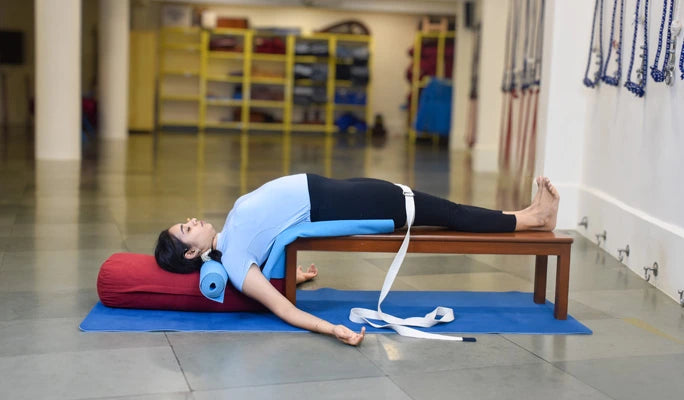 Steps:
- Position the setubandh bench on the mat. This bench will be used to support your back.
- Place a folded yoga sticky mat on the bench for the lower back support.
- Place a yoga bolster horizontally on the mat and sticky mat for your head and shoulder support.
- Sit on the bench covered with sticky mat and gently tie your thighs with yoga belt to keep legs aligned.
- Gently lie down towards the back by resting your head on the Bolster.
- Ensure that your arms are resting on the mat with your palms facing up.
- Keep your knees aligned with your ankles and parallel to each other.
- Roll your shoulders back and down to broaden your chest and open your heart.
- Hold the pose for 30 seconds to 1 minute, breathing deeply and evenly.
- Now hold the bench and lift yourself up.
Benefits: This pose improves circulation, strengthens the cardiovascular system, and enhances lung function. It also stimulates the nervous system, helping to regulate blood pressure fluctuations.
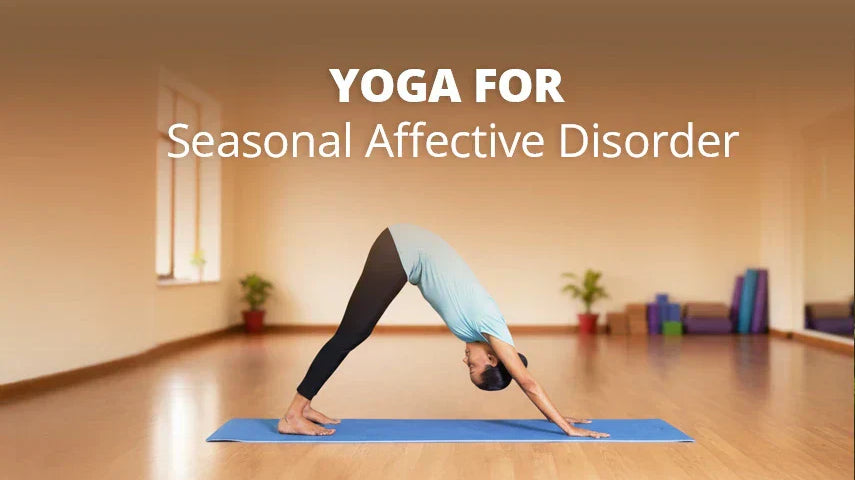
4. Adho Mukha Svanasana (Downward-Facing Dog Pose)
 Steps:
- Begin in a tabletop position with hands under shoulders and knees under hips.
- Take a yoga block, keep your palms on it for support, tuck your toes, and lift your hips toward the ceiling.
- Try to keep your legs straight while keeping a slight bend in the knees if needed.
- Place yoga block below your head for the support.
- Gently press your heels toward the mat without forcing them.
- Keep your arms straight, shoulders away from ears, and engage your core.
- Stay for a few breaths, keeping a steady and even inhale-exhale.
- Lower your knees back to the mat to exit the pose.
Benefits: This pose enhances blood flow to the brain, reducing dizziness and boosting energy levels. It also stretches and strengthens the entire body, improving overall circulation and oxygenation.
5. Prasarita Padottanasana (Wide-Legged Forward Bend Pose)
 Steps:
- Stand at the top of your mat with your feet parallel to each other and wider than hip-width apart.
- Ensure that your toes are pointing forward.
- Keep the yoga chair in front of you by placing a yoga blanket on it.
- Inhale and lengthen your spine, lifting your chest and rolling your shoulders back.
- Exhale and engage your abdominal muscles as you begin to hinge at your hips, slowly folding forward.
- As you fold forward, maintain the length in your spine and reach your arms straight down towards the chair.
- This provides support and helps to maintain the length of your spine.
- Adjust the distance between your feet as needed to ensure stability and comfort in the pose.
- Keep your legs active and engaged, pressing firmly into the ground through your feet.
- Allow your torso to relax over your legs, releasing any tension in your neck, shoulders, and spine.
- Hold the pose for 30 50 seconds, breathing deeply and evenly.
- To release, inhale and engage your abdominal muscles to slowly lift your torso back up to a standing position.
Benefits: By improving blood circulation throughout the body, particularly to the brain, this asana gently increases blood pressure. It can effectively counteract low blood pressure and its associated symptoms.
Additional Lifestyle Tips for Managing Low Blood Pressure
In addition to practicing yoga, adopting a few lifestyle changes can help in stabilizing blood pressure levels. Consider the following tips:
- Stay Hydrated: Dehydration, a potential factor leading to hypotension, can be effectively prevented by consuming enough fluids throughout the day. It is natural for someone going through physical exertion to need more of these elements than the body can provide.
- Eat Small, Frequent Meals: In contrast, heavier meals may cause an inconsistent drop in blood pressure, which could be the cause of such uncomfortable sensations. Consuming smaller meals that are both well-balanced and are eaten at more regular and shorter intervals will be a beneficial method.
- Increase Salt Intake (If Advised by a Doctor): Sodium has a minimal effect of raising blood pressure so it must be consumed in moderation as well as under a doctor's recommendation.
- Avoid Sudden Position Changes: It is important to change positions slowly while going from a lying or sitting position to prevent feelings of faintness or light-headedness.
- Engage in Regular Physical Activity: By walking, swimming, and other light exercises, the circulation will be normal, and your cardiovascular health will be good.
- Limit Alcohol and Caffeine: Alcohol containing products and products with high caffeine content can produce undesirable changes in blood pressure levels thus they should be taken with caution.
- Practice Stress Management: Meditation, Pranayama (breathing exercises), and mindfulness are examples of a meditation program, one of the options that can help people deal with their problems.
Conclusion
Yoga is a natural and effective way to manage low blood pressure by improving circulation, reducing stress, and enhancing heart health. The combination of gentle yoga poses, breathing techniques, and relaxation practices makes yoga an ideal approach for individuals suffering from hypotension. Regular practice can help stabilize blood pressure levels, prevent symptoms like dizziness and fatigue, and improve overall vitality.
However, it is essential to listen to your body and avoid overexertion. If you experience extreme fatigue or dizziness during yoga practice, take a break and hydrate yourself. Always consult a healthcare professional before starting a new exercise regimen, especially if you have chronic hypotension or other underlying health conditions. By practising yoga poses for low blood pressure, you can live a healthy lifestyle and enjoy a better quality of life.