 Table of Contents
- Introduction
- Benefits of Practicing Core Yoga Poses for Posture
- Core Yoga Poses for a Stronger Posture
- Common Mistakes to Avoid
- Conclusion
The core is the basis for your body's support system by acting as a natural corset. It supports your internal organs, stabilise the spine, and assist with powerful movement. A visible six-pack is just one part of a strong and stable core. Without a strong core we tend to revert to poor postural habits like slouching, leaning forward, and shifting in ways that lead to more chronic pain and fatigue. Luckily, an ancient practice of yoga offers a complete and accessible solution.
Yoga poses should focus on engaging and strengthening your deep core muscles by practicing these poses regularly. By practicing these poses regularly, you can build the strength and awareness to hold a perfect posture with ease on and off your mat. Here you will find the primary benefits, and some core yoga poses, necessary to create a strong foundation for a healthier, stronger spine, and better posture.
Benefits of Practicing Core Yoga Poses for Posture
Practicing core yoga poses gives numerous benefits, many of which go way beyond appearances. These benefits are directly connected to improving posture and general health.
- Spinal Support and Stability: Your core muscles (rectus abdominis, obliques, and transverse abdominals) provide primary support for the spine. When you have a strong core, your spine will not collapse, and your body can stay in an upright, aligned posture.
- Reduces Back Discomfort: Weakened core muscles are commonly linked to chronic back pain. Without the core engaged, other muscles, particularly the lower back are required to work harder to compensate. Core yoga asanas ease stress of spinal support and strengthens the muscles supporting your core.
- Better Coordination and Balance: Balance is dependent upon a strong core. Your core muscles keep your centre of gravity active. In yoga, when you do balance poses or movement, you must be using your core to stay stable.
- Better Body Awareness: Yoga is a mindful practice as you develop your ability to be more aware of your body's position in space. When you hold a pose and focus on using your core, you start to feel what a properly aligned spine feels like.
- Deeper, More Effective Breathing: Your core also consists of the diaphragm, which is an important muscle that helps you breathe. When you strengthen the entire core area, you give your diaphragm a more stable base to work off, so you can breathe more deeply and more effectively.
Core Yoga Poses for a Stronger Posture
Here are five effective core yoga poses that are excellent for building core strength and improving your posture.
1. Bow pose (Dhanurasana)
A powerful pose to which helps to open the chest and stimulate the abdominal organs.
 Steps:
- Lie on your stomach and pull your knees toward yourself using a yoga belt, reaching back to hold your ankles.
- Inhale and lift your chest and legs off the ground, forming a bow shape.
- Hold for 20-30 seconds, then release.
2. Chair Pose (Utkatasana)
This is a gentle yet powerful pose for warming up the spine and building core awareness.
 Steps:
- Stand with feet at shoulder- width apart and arms at your sides.
- Inhale and raise your arms overhead.
- Exhale and bend your knees, as if sitting on an invisible chair.
- Keep your back straight and thighs parallel to the ground.
- Hold the pose for 30 seconds to a minute.
- Inhale and return to standing pose.
3. Downward-Facing Dog Pose (Adho Mukha Svanasana)
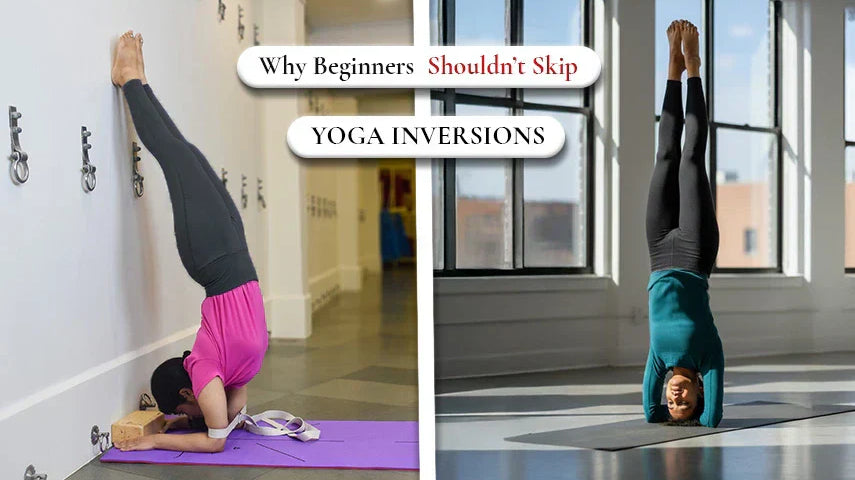
Downward-Facing Dog Pose is an inversion that not only stretches the hamstrings and calves but also strengthens the core and arms.
 Steps:
- Begin in a tabletop position with hands under shoulders and knees under hips.
- Take two yoga blocks, keep your palms on it for support, tuck your toes, and lift your hips toward the ceiling.
- Try to keep your legs straight while keeping a slight bend in the knees if needed.
- Place yoga block below your head for the support.
- Gently press your heels toward the mat without forcing them.
- Keep your arms straight, shoulders away from ears, and engage your core.
- Stay for a few breaths, keeping a steady and even inhale-exhale.
- Lower your knees back to the mat to exit the pose.
4. Boat Pose (Navasana)
Boat Pose is a challenging but highly effective pose for strengthening the rectus abdominis (the "six-pack" muscles) and the deep hip flexors.
 Steps:
- Begin by sitting on the yoga mat with legs extended in front of you (Dandasana).
- Sit evenly on both sitting bones, grounding them firmly into the floor.
- Keep your spine tall and your shoulders relaxed.
- Place the Yoga Belt around the feet.
- Lean the back slightly to balance your sitting bones while keeping your spine straight.
- Keep your knees bent at a comfortable angle, forming a "V" shape with your torso.
- Balance on your sitting bones and lift your chest, finding stability and strength in your core.
- Hold the pose for few seconds.
- Keep your gaze forward and your neck relaxed.
- Gently release the pose by lowering your feet to the mat, keeping your spine straight.
5. Bridge Pose (Setu Bandhasana)
Bridge Pose is a gentle backbend that strengthens the glutes, hamstrings, and lower back, all of which are essential for good posture.
 Steps:
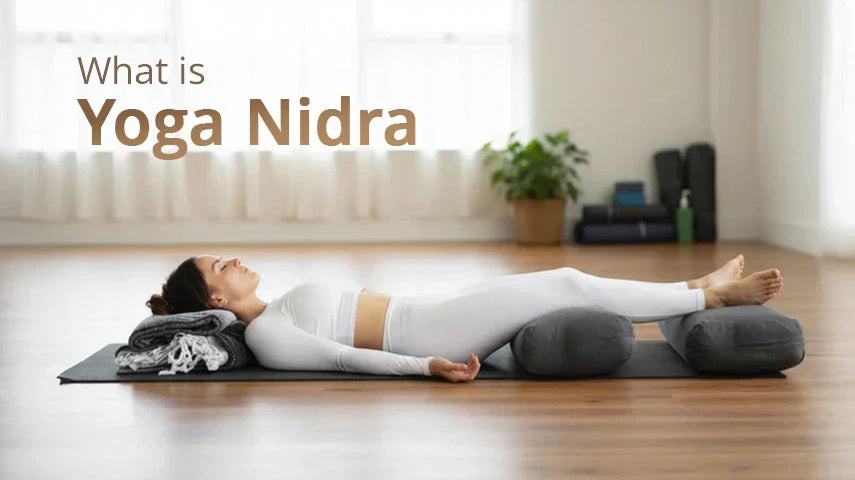
- Position the bolster horizontally and folded yoga blanket on the mat. These will be used to support your back and shoulders.
- Gently lie down on the bolster by resting your head on the Blanket.
- Ensure that your arms are resting on the mat with your palms facing up.
- Keep your knees aligned with your ankles and parallel to each other.
- Roll your shoulders back and down to broaden your chest and open your heart.
- Hold the pose for 30 seconds to 1 minute, breathing deeply and evenly.
Common Mistakes to Avoid
To get the most out of these poses and prevent injury, be mindful of these common mistakes.
- Straining your neck: Many people also strain their necks, especially when transitioning into and out of Bridge Pose, and in Downward-Facing Dog Pose. Your neck should be in alignment with your spine. In Bridge Pose, gently tuck in your chin slightly to release the pressure in the back of your neck. In Downward- Facing Dog Pose, let your head hang heavy and loose.
- Holding your breath: When practicing yoga, let your breath be your guide. If you hold your breath, your body will tense up, and that tension will impede your muscles from getting the oxygen they need. You should be taking deep and full breaths through all your asanas.
- Forcing a pose: Respect your body and avoid pushing yourself into painful positions. Modify poses as needed to suit your comfort and ability. In the long run, consistency and achieving the correct final pose matter far more than how forcefully you push yourself into a pose.
Conclusion
The benefits of developing a strong torso can extend beyond the yoga mat (although it is beneficial here too). By committing to connecting these core postures and core strength to your practice you will create a strong, steady centre and a better sense of alignment in your body. This better sense of alignment will enable you to keep awareness of your own alignment where possible when presented with everyday opportunities. If you can commit to just a few minutes a day, you will notice immediate improvements in the way you sit, stand and move through the world!